That life is a journey is a truth we all understand. In our Western narrative, this journey is often a story of destinations. It’s the cross-country road trip culminating in the view of the Pacific; it’s the arduous mountain climb rewarded by the breathtaking vista from the summit; it’s the meticulously planned career path leading to the corner office. The focus is, almost always, on the arrival.
But what if the journey’s greatest treasures are not found at the destination, but are scattered like wildflowers along the path itself? In the ancient wisdom of the East, the essence of a meaningful journey is found not in conquest, but in connection—a deep, resonant connection with “the scenery along the way, and the mood of the one who sees it.” The landscape and the heart, together, become the true destination.
This is an invitation to a different kind of travel. It is not a journey to a place, but a journey into a state of being. Let us walk, for a moment, through the inner landscape of Taoist, Zen, and poetic wisdom, and explore this profound, inner pilgrimage.
First Stop: The Way of the River (A Taoist Perspective)
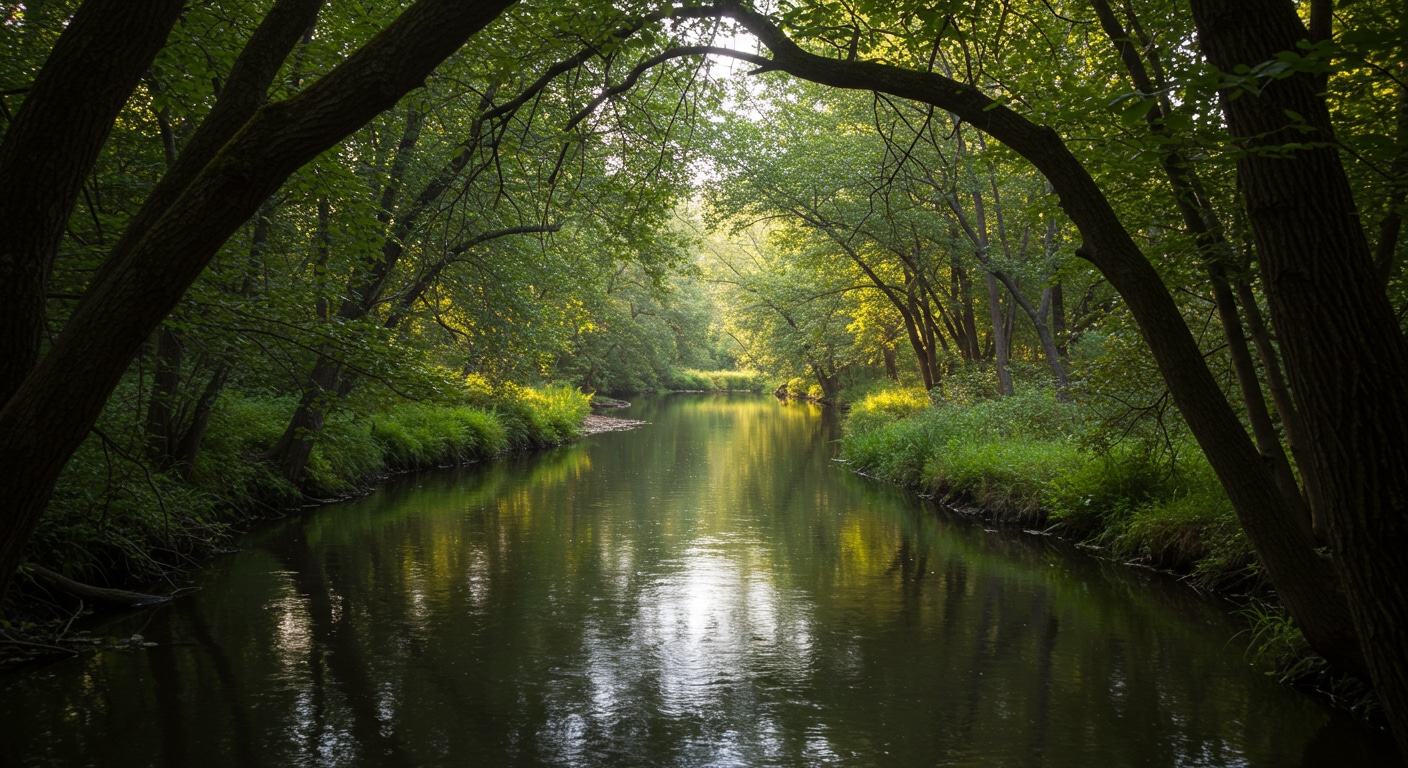
The Taoist sages saw life not as a highway to be conquered, but as a river to be followed. A highway is a human invention—straight, efficient, and designed with a single destination in mind. A river, however, is an expression of nature itself. It does not strive; it flows.
This is the heart of Wu Wei (無為), often translated as “non-action,” but more accurately “effortless action” or “action in harmony with the flow of nature.” In Chinese philosophy, Wu Wei is not laziness or passivity—it is a way of acting without forcing, allowing life to unfold in its own organic rhythm. As Laozi wrote in the Tao Te Ching, the greatest good is like water, which “benefits all things and does not compete.” Water’s immense power comes not from brute force, but from its willingness to yield, adapt, and seek the low ground.
Our modern lives are often lived like highways. We create rigid blueprints—five-year plans, ten-year goals—and attempt to force the wild, living river of our lives into concrete channels. We gain a sense of control, but lose the vitality of the river itself: the unexpected bends, the quiet, deep pools, the joyful, rushing rapids.
The Taoist invitation is to step out of the vehicle and feel the current. Trust that the river knows its own way to the ocean. As Zhuangzi suggested, true freedom is found not in arriving at a fixed point, but in the joyful, untethered process of wandering itself.
A Practice in Flow: Aimless Wandering
Once a week, for one hour, give yourself the gift of aimless wandering. Leave your phone and destination behind. Let your feet lead you. Follow a path simply because it curves invitingly. When was the last time you walked without a goal? What did you notice then? This is not wasted time—it is a way to practice letting go of control and allowing yourself to be guided by the gentle, intuitive currents of your own life’s river.
Western parallel: In modern psychology, this resonates with “flow state”—the effortless immersion in an activity without fixation on results.
Second Stop: The Scenery of Now (A Zen Perspective)
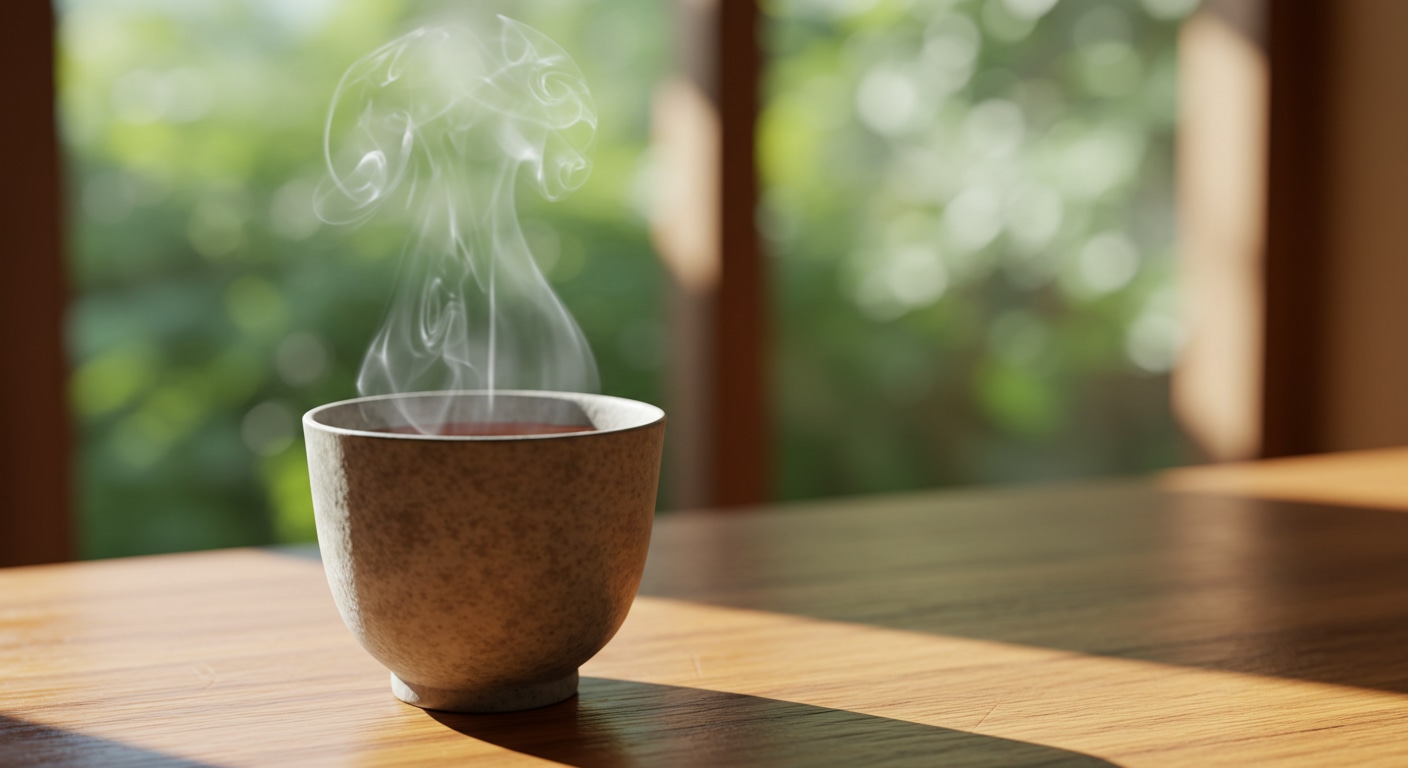
If Taoism teaches us to follow the flow of the river, Zen teaches us how to see the water. It offers a radical, simple truth: the scenery of your life exists only in one place—this present moment.
There is a famous Zen story about the master Zhaozhou. A monk asked for guidance. Zhaozhou said, “Have you eaten your morning rice?” The monk replied, “Yes.” “Then go wash your bowl.” In that instant, the monk was enlightened. The teaching is clear: enlightenment is not a future event—it is here, in the simple, total immersion of what you are doing now.
This is the essence of “Drink tea now.” When you are drinking tea, just drink tea. Feel the warmth of the cup, smell the rising steam, taste the earthiness on your tongue. We often miss life’s scenery not because it’s absent, but because our minds are elsewhere—regretting the past, rehearsing the future.
Every step is the path. Every breath is the destination.
A Practice in Presence: The Sensory Anchor
Several times a day, pause for one minute and place your awareness entirely on one sense. Listen to the sounds around you without naming them, or feel the weight of your feet on the ground. Try it now: what is the smallest detail in your surroundings you haven’t noticed before? This is a way to anchor yourself in the vivid, unfolding present.
Western parallel: Similar to mindfulness meditation, widely practiced today for stress reduction and mental clarity.
Third Stop: Dwelling in the Landscape (A Poetic Perspective)
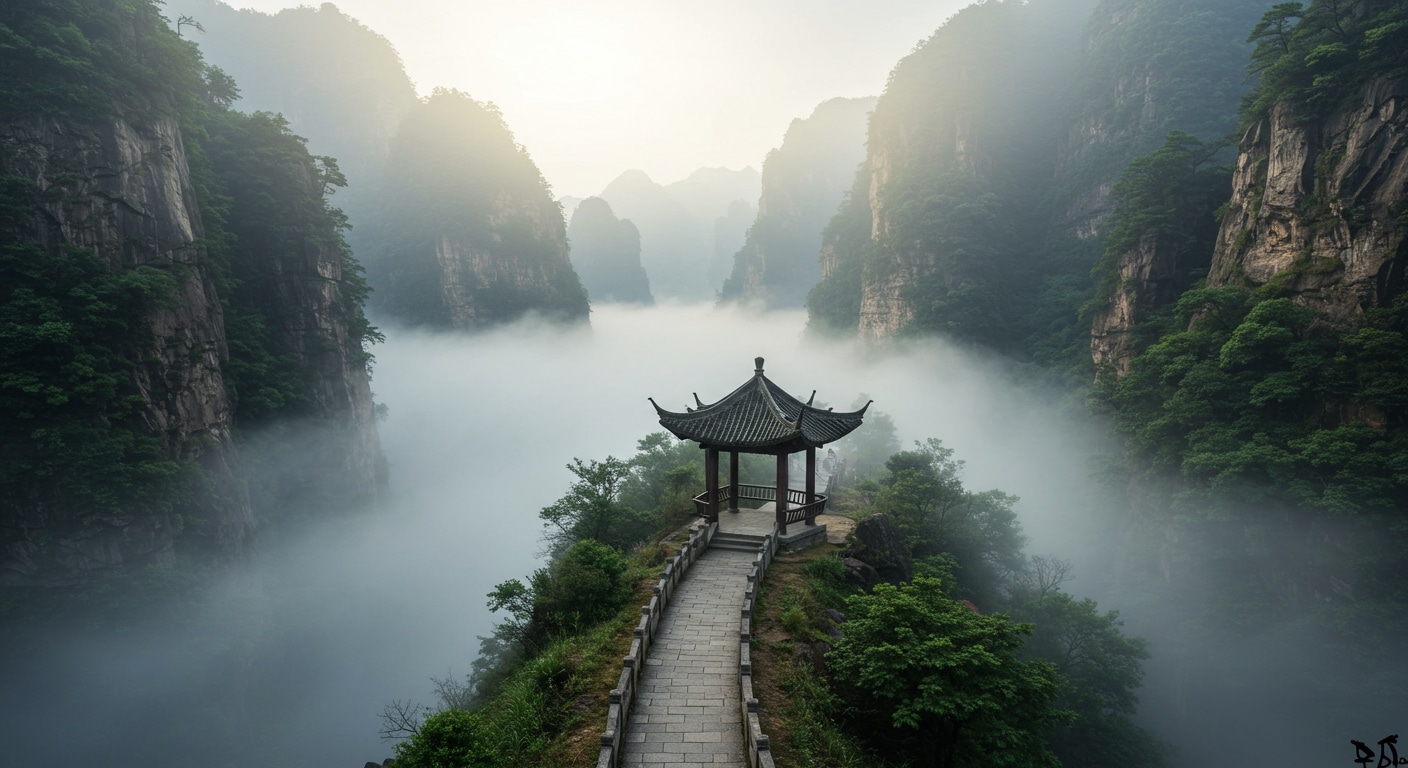
Having learned to follow the river and see the water, the final stage of this inner pilgrimage is to let the landscape enter you.
In Chinese art and literature, the concept of Yijing (意境) is central. It can be translated as “artistic conception,” but this is only partial—it is the fusion of the external scene with the internal emotional realm. The highest purpose of travel, for ancient poets and painters, was not just to see a mountain, but to become the mountain.
The Song Dynasty painter Guo Xi wrote that a great landscape is one that is not only “walkable” and “viewable,” but “livable” and “wanderable.” The 8th-century poet Wang Wei captured this in: “Walk to where the water ends, and sit to watch the clouds rise” (行到水窮處,坐看雲起時). At the stream’s end, a shift in the heart reveals a vaster landscape—the rising clouds.
This is Yijing: the scenery does not change, but you do.
A Practice in Dwelling: The Process Journal
At day’s end, instead of listing only what you achieved, note one moment of “unexpected scenery” you encountered—a way light fell across a wall, a line from a stranger, the smell of rain on the pavement. What image from today would you place in a painting?
Western parallel: Comparable to the practice of gratitude journaling, but focused on aesthetic and emotional resonance.
Packing Anew, Lighting the Lantern
The ancient wisdom of the East does not ask us to abandon ambition, only to hold it lightly. A map, however detailed, is not the territory itself.
The richness of our life’s journey is not in the number of peaks conquered, but in the luminous moments, profound connections, and quiet insights gathered along the way. As you set out again, light the lantern within—the lantern of awareness. With it, you’ll find that the destination is not a place you arrive at, but a state of being you carry with you.
And perhaps, along your path, you’ll notice the wildflowers.