
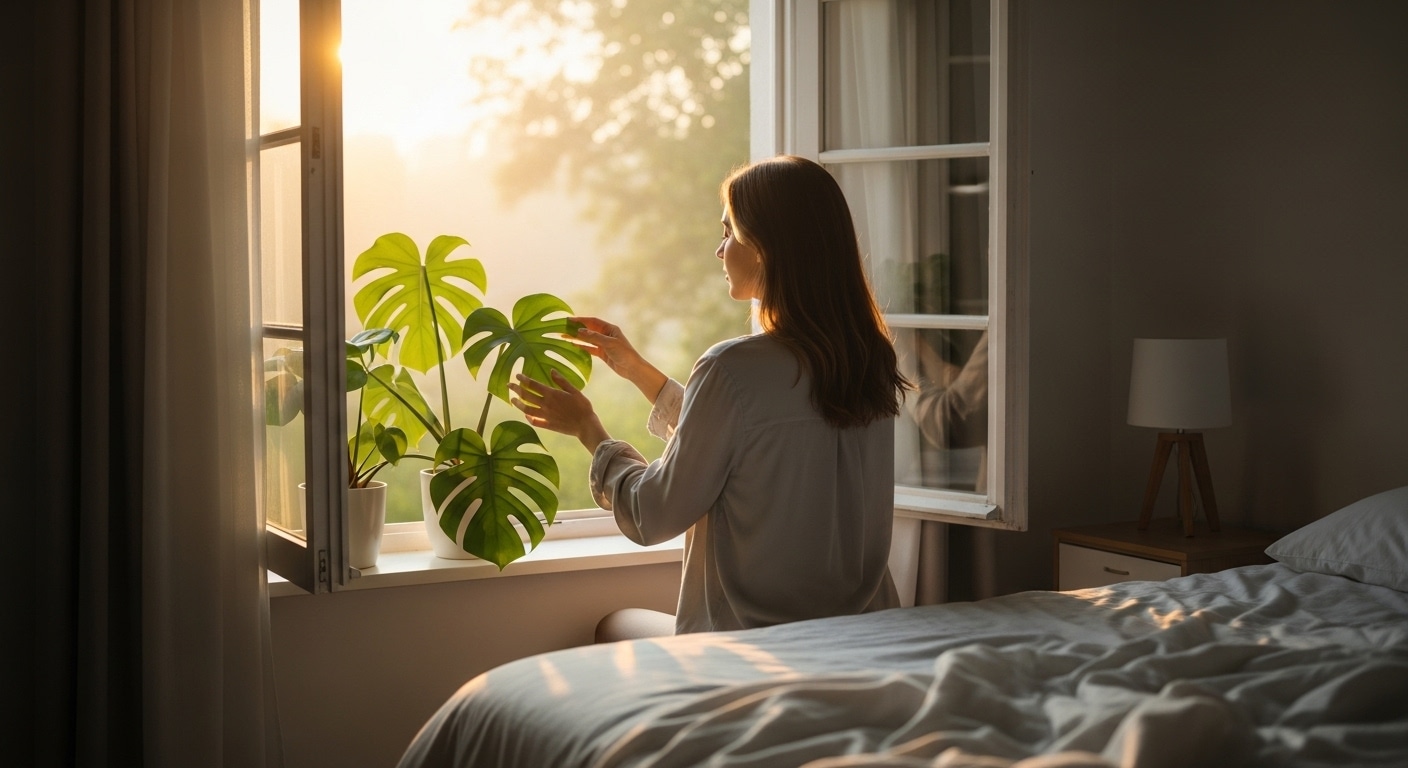
Feeling down, overwhelmed, or like you’re moving through fog? You’re not alone. Today, more and more people, especially young adults under 30 and women, are grappling with a heavy spirit and a persistent sense of being stuck. But here’s a vital truth: these feelings are not a life sentence, and they certainly don’t define who you are. Ancient Chinese wisdom, with its deep understanding of natural rhythms and energy, offers a compassionate and empowering perspective on why these feelings can arise and, more importantly, how we can actively work to shift them by harmonizing our own personal spaces.
This isn’t about dismissing very real challenges or replacing professional help. It’s crucial to remember that the insights and practices discussed here are intended to complement, not replace, professional medical and psychological care. If you or someone you know is struggling, please reach out to a qualified healthcare provider or mental health professional. For comprehensive information and resources, the National Institute of National Institute of Mental Health (NIMH) is an excellent starting point.
Our journey here is to explore how your home environment, viewed through the lens of traditions like Feng Shui, can become a powerful ally in your renewal and a preventive tool for your well-being. Let’s discover how you can Tune Your Home, Brighten Your Horizon. This simple idea will be our guiding light: small, intentional changes in your space can lead to significant shifts in your spirit.
Why Do We Feel This Way? A Chinese Wisdom View on Inner Clouds
Traditional Chinese Medicine (TCM) and philosophy don’t view these heavy feelings as a purely mental or brain-based issue. Instead, they see it as a sign of imbalance within the body’s entire energetic system and its relationship with the environment. Think of it less like a switch that’s flipped “on” and more like a garden that’s not getting the right mix of sun, water, and nutrients.
Qi Stagnation: When Your Inner River Stops Flowing
At the core of Chinese wisdom is Qi (pronounced “chee”), the vital life force that flows through all living things and our surroundings. When Qi is abundant and moving smoothly, we feel energetic, clear-headed, and emotionally balanced. A state of low spirits, from this perspective, is often linked to “Qi stagnation.” Imagine a river: when it flows freely, it’s vibrant and full of life. But if it gets dammed up or blocked, the water becomes murky and still.
What causes Qi to stagnate? Chronic stress, unresolved emotions, trauma, lack of physical activity, poor diet, and even a persistently disharmonious environment can all impede Qi flow. For young people navigating academic pressures, career uncertainties, or social media comparisons, and for women often juggling multiple roles, these stressors can be particularly potent.
How it feels: This stagnation can manifest as that classic feeling of being stuck, heavy, unmotivated, and unable to see a way forward. It’s like a weight pressing down on your spirit.
Elemental Imbalance (Wuxing – The Five Elements): Nature’s Harmony Off-Kilter
Chinese philosophy also uses the Five Elements – Wood, Fire, Earth, Metal, and Water – to understand the dynamic interplay of energies in our bodies and environment. Each element is associated with specific organs, emotions, seasons, and qualities.
- Wood: Represents growth, vision, and assertiveness. An imbalance (too little Wood, or Wood energy that’s suppressed) can lead to feelings of frustration, indecisiveness, and a lack of direction – common feelings when we are out of balance. Feng Shui for this might involve bringing in healthy plants or green colors to gently stimulate Wood energy.
- Fire: Relates to joy, passion, and connection. A deficiency of Fire can manifest as a lack of enthusiasm, social withdrawal, and a coldness towards life. Warm colors, good lighting, and creating spaces for joyful connection can help nourish Fire.
- Earth: Symbolizes stability, nurturing, and grounding. Too much Earth can lead to overthinking and worry, while too little can make you feel insecure and ungrounded. Earthy tones and stable furniture can support this.
- Metal: Associated with clarity, organization, and the ability to let go. An excess can lead to rigidity or excessive grief, while a deficiency might result in disorganization and an inability to process loss. Feng Shui might involve decluttering (letting go) and introducing elements of beauty and precision.
- Water: Linked to introspection, wisdom, and flow. Too much Water, especially if stagnant, can correspond to feelings of fear, isolation, and being overwhelmed by deep emotions – a prominent feature in many low-energy states. Ensuring gentle movement (like a tiny, quiet tabletop fountain in a living area, not the bedroom) and avoiding overly dark or damp spaces can be helpful.
The idea isn’t to rigidly diagnose but to see how your environment might be mirroring or exacerbating certain elemental imbalances that contribute to how you feel.
Yin-Yang Imbalance: Too Much Shadow, Not Enough Light
The concept of Yin and Yang describes the complementary opposites that make up all existence – dark/light, passive/active, cold/warm. Health and well-being depend on a harmonious balance between them. A state of low energy often leans towards an excess of Yin: feelings of darkness, lethargy, coldness, withdrawal, and a lack of movement. Our environment can reflect or even encourage this. A home that’s predominantly dark, cluttered (stagnant Yin), and lacking in vibrant Yang energy (light, fresh air, uplifting colors) can subtly reinforce these feelings.
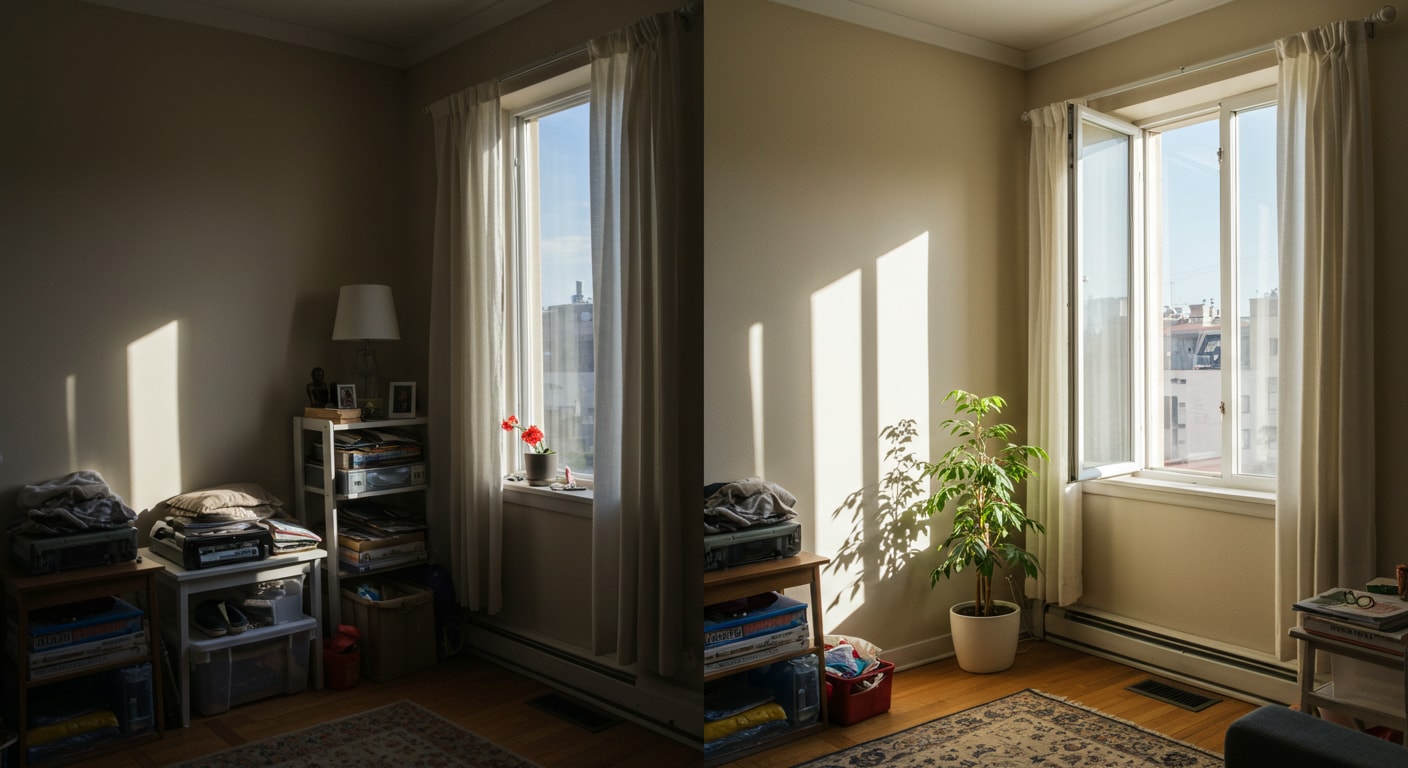
This diptych image starkly contrasts the Yin and Yang aspects of a living space, illustrating the transformative power of light.
The left side, steeped in shadows and subdued light, embodies a heavier Yin energy. Cluttered areas and dim illumination suggest a potential stagnation of Qi, leading to a sense of confinement and stillness. This represents a space where vital energy may be suppressed, mirroring feelings of inertia or low spirits.
The right side, bathed in the warm embrace of sunlight streaming through the window, exemplifies a vibrant Yang energy. The light invigorates the space, encouraging the flow of Qi and dispelling the stagnant atmosphere. A thriving potted plant further enhances this sense of vitality, symbolizing growth and renewal (Wood element). The contrast highlights the importance of introducing Yang energy to uplift and revitalize an environment, promoting balance and a more positive state of being. The image underscores the traditional Chinese belief that harmonizing Yin and Yang is essential for well-being and a thriving living space.
Shen (Spirit) Disturbance: When Your Inner Light Dims
In TCM, the Shen is often translated as “Spirit” or “Mind.” It resides in the Heart (the organ system, not just the physical heart) and is responsible for consciousness, emotions, and our overall radiance. Prolonged emotional distress, unresolved trauma, or a consistently disharmonious living environment can disturb the Shen. When the Shen is unsettled, it can lead to anxiety, insomnia, and a deep sense of unhappiness or disconnection from one’s spirit – all hallmarks of a profound energetic imbalance. Nurturing your Shen involves creating peace, beauty, and joy in your life and surroundings.
Good News: These Feelings Aren’t a Life Sentence, They’re an Imbalance
Hearing about Qi stagnation or Shen disturbance might sound intimidating, but the core message from Chinese wisdom is actually one of profound hope and empowerment. These traditions see such states not as permanent flaws or fixed identities, but as imbalances. And the beautiful thing about an imbalance is that it can be rebalanced.
Think of it like a musical instrument that’s out of tune. It doesn’t mean the instrument is broken; it just needs to be adjusted. Similarly, your mind, body, and spirit, when experiencing these heavy states, are sending a signal that something needs re-tuning. This perspective shifts the focus from “What’s wrong with me?” to “What needs to be brought back into harmony?”
This is where you gain agency. You are not passively defined by these feelings. Instead, you can actively participate in your own renewal by making conscious choices to restore balance – in your lifestyle, your mindset, and, very powerfully, in your environment.
Tune Your Home, Brighten Your Horizon: Feng Shui for Healing and Prevention
Feng Shui offers practical ways to adjust your living space to encourage the smooth flow of uplifting Qi, balance the elements, and create an environment that nurtures your Shen. Remember our golden phrase: Tune Your Home, Brighten Your Horizon. Let’s look at how.
Clear the Path: Declutter for Mental Clarity
Physical clutter is more than just an eyesore; it’s energetic quicksand. It creates Qi stagnation, which can mirror and exacerbate feelings of being stuck, overwhelmed, and mentally foggy.
Action Steps:
- Start Small, Win Big: Don’t try to tackle the whole house at once – that’s a recipe for overwhelm! Pick one small area: a drawer, a shelf, your nightstand. Set a timer for 15-20 minutes.
- The “One Year” Rule: If you haven’t used something in a year (and it’s not a precious sentimental item), seriously consider if you still need it.
- Digital Declutter: For younger people especially, digital clutter (too many apps, overflowing inboxes, chaotic desktops) can also contribute to mental overload. Schedule time to clean up your digital spaces too.
- Focus on Entrances: Your main door is the “mouth of Qi.” Keep it clear, welcoming, and easy to access. No shoes piling up, no coats falling off hooks.
The Feeling: As you clear physical space, you’ll often feel a corresponding mental lightness and clarity. It’s incredibly empowering.
Let There Be Light & Fresh Air: Invite Yang Energy In
As we discussed, a state of low energy often involves an excess of Yin energy. Bringing in more Yang energy – light, warmth, and activity – can be a game-changer.
Action Steps:
- Maximize Natural Light: Open curtains and blinds wide every morning. Clean your windows! It’s amazing how much more light clean glass lets in.
- Strategic Lighting: Use layers of light. Bright overhead light for general tasks, and softer lamps for a cozy, warm ambiance in the evening. Consider “daylight” bulbs for workspaces if you lack natural light.
- Fresh Air Daily: Open windows for at least 10-15 minutes each day, even in cooler weather, to circulate Qi and clear out stale energy. Fresh air invigorates the senses and the mind.
The Feeling: A brighter, airier home instantly feels more uplifting and can help dispel that “heavy cloud” feeling.
Your Bedroom Sanctuary: The Epicenter of Rest and Renewal
Sleep is profoundly affected by prolonged stress and emotional imbalance, and your bedroom is where you rest and rejuvenate. Making it a true sanctuary is paramount.
Action Steps:
- Command Position for Bed: If possible, place your bed so you can see the door without being directly in line with it. This fosters a subconscious sense of security.
- Headboard Power: A solid headboard, preferably against a solid wall, offers support and stability.
- Colors of Calm: Opt for soothing, nurturing colors – soft blues, greens, lavenders, warm grays, or creamy neutrals. Avoid overly stimulating colors like bright reds or oranges in large amounts.
- Minimize Electronics: The bedroom is for sleep and intimacy. Keep TVs, computers, and work materials out. If you use your phone as an alarm, put it across the room so you’re not tempted to scroll before sleep or first thing upon waking.
- Comfort is Key: Invest in comfortable, natural bedding. Keep the room tidy and inviting.
The Feeling: A peaceful, well-arranged bedroom can significantly improve sleep quality and help you wake up feeling more rested and less anxious.
Living Spaces that Lift You: Fostering Connection and Joy
Your common areas should invite positive interaction and provide comfort.
Action Steps:
- Arrange for Connection: Position sofas and chairs to facilitate conversation, rather than all facing a TV.
- Incorporate Uplifting Elements: Display art that inspires you, photos of happy memories, or objects that bring you joy.
- Comfortable Textures: Soft rugs, plush cushions, and cozy throws can make a space feel more nurturing and inviting.
- Sounds of Serenity: Consider playing gentle, uplifting music or nature sounds at low volume.
The Gentle Power of Plants and Nature
Bringing elements of nature indoors is a simple yet powerful way to boost Wood energy (growth, vitality) and connect with life.
Action Steps:
- Start with Easy Greens: If you’re new to plants, choose hardy, low-maintenance varieties like snake plants, pothos, or ZZ plants.
- Fresh Flowers: Even a small bouquet of fresh flowers can instantly brighten a room and your mood.
- Natural Materials: Incorporate wood, bamboo, stone, cotton, and linen in your décor.
Intentional Small Changes: The Ripple Effect
Remember, the goal isn’t perfection; it’s progress and intention. You don’t have to do everything at once.
Action Steps:
- One Thing This Week: Choose just one Feng Shui tip from this list to implement this week.
- Notice the Shift: Pay attention to how you feel after making a change, no matter how small. This positive reinforcement will motivate you.
- Personalize It: What feels good to you? Feng Shui is a guide, not a rigid set of rules. Your intuition is important.
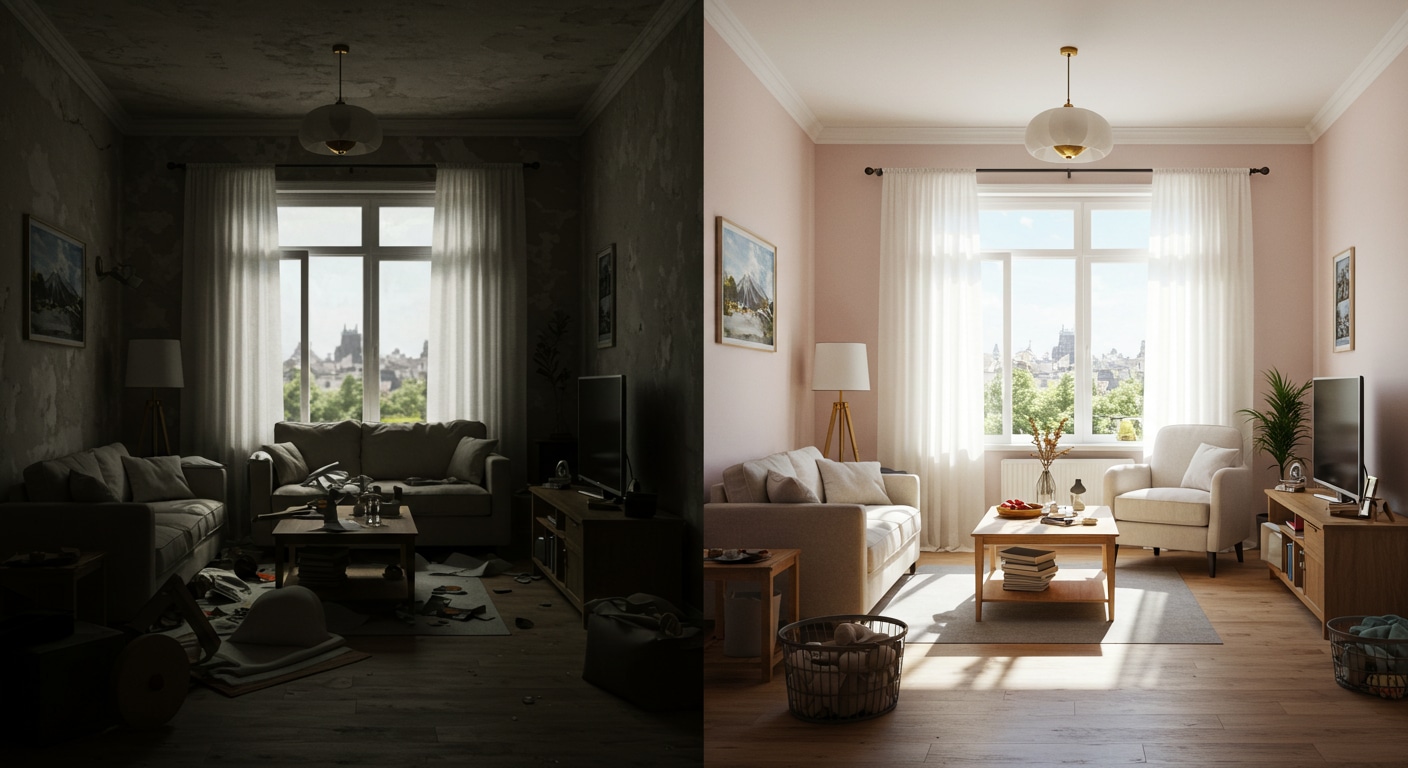
Take a moment to imagine you’re actually there. What kind of feeling do you get in the cluttered, darker space on the left? Now, shift your focus to the clean, bright room on the right. How does that space make you feel?
Personalizing Your Path to Harmony: Listening to Your Space and Spirit
While these general principles can create a wonderfully supportive foundation, every individual and every home is unique. Sometimes, persistent feelings of imbalance or specific challenges might benefit from a more personalized look.
This is where a service like The Wellness & Vitality Blueprint can provide deeper insights into your inherent energetic makeup and the specific types of environmental support that would be most beneficial for you. It’s about creating a space that truly resonates with and supports your individual journey back to balance. For other life areas, you might also find our Career & Abundance Blueprint or Relationship Harmony Blueprint to be suitable.
Moving Forward With Hope and Harmony
Feeling the weight of a heavy spirit is incredibly challenging, but the wisdom of ancient Chinese traditions offers a beacon of hope. It reminds us that we are interconnected with our environment and that by consciously shaping our surroundings, we can profoundly influence our inner state. It’s about restoring flow, finding balance, and nurturing our spirit.
Remember, Tune Your Home, Brighten Your Horizon. Each small, positive change you make in your living space is an act of self-care and a step towards a brighter, more balanced life. These practices, when used alongside professional support, can be a powerful part of your healing toolkit. Embrace the journey with curiosity and self-compassion. You have the power to cultivate a home that not only shelters you but actively supports your journey to well-being.