
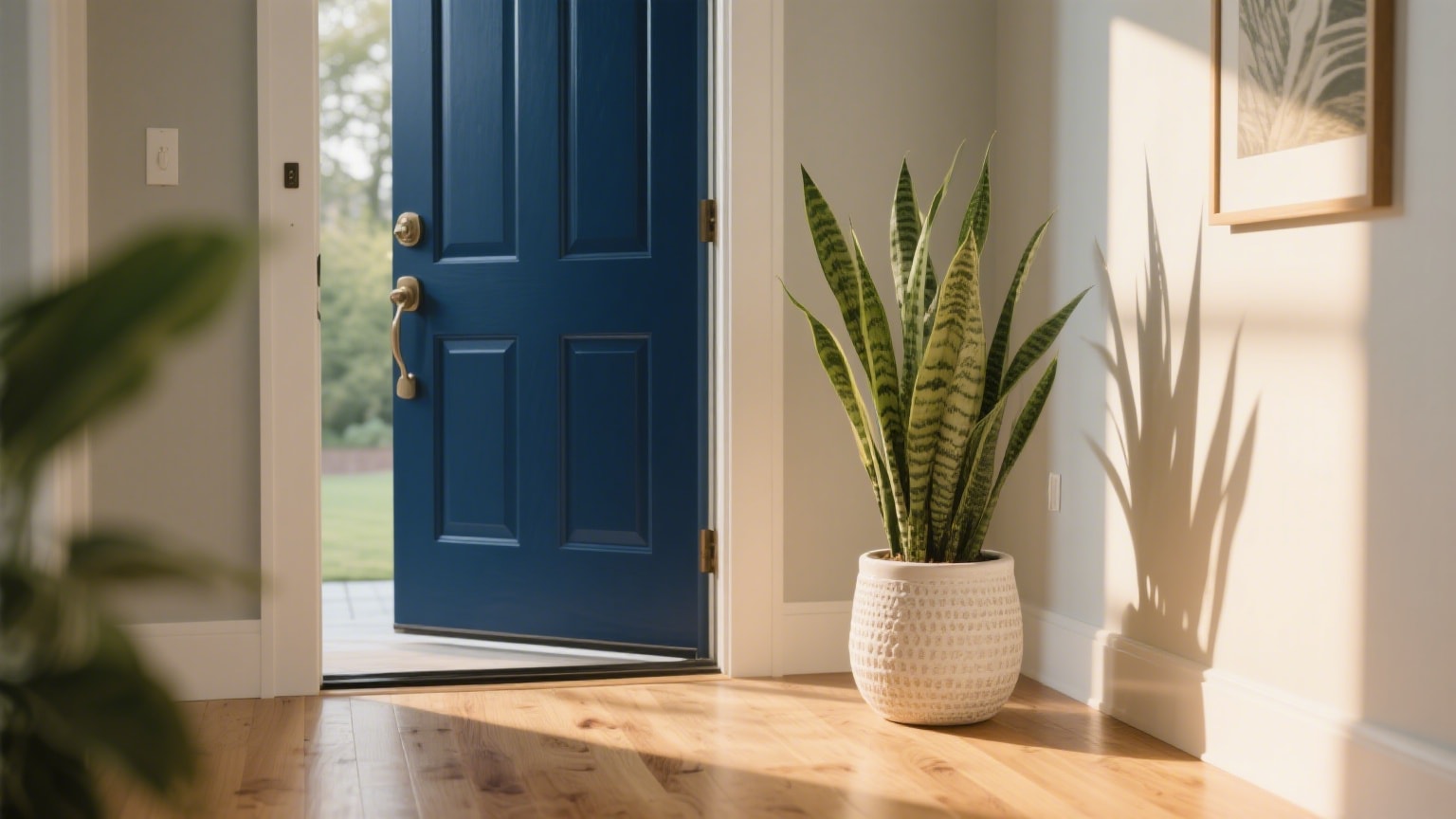
Hey there! Have you ever walked into a room and just felt… off? Like the air was heavy? On the flip side, have you ever been in a space that felt so good you never wanted to leave?
That invisible “vibe” that makes a space feel either fantastic or frustrating has a name. For thousands of years, ancient Chinese wisdom has called it Feng Shui.
Now, before you start picturing complicated star charts and thinking you’ll have to paint your entire living room red (you won’t, I promise!), let’s just take a breath. At its heart, Feng Shui is incredibly simple, practical, and intuitive. It’s the art of arranging your environment to improve your life. That’s it. It’s about creating a home that doesn’t just shelter you, but actively reduces your stress, improves your sleep, and attracts new opportunities.
Think of it as Interior Design with a deeper purpose. It’s a roadmap to creating a space that feels as good as it looks. So, if you’re curious about how to make your home a powerhouse of positive energy, you’re in the exact right place. Let’s dive in.
What in the World is Feng Shui Anyway?
Let’s get the name out of the way. “Feng” (pronounced ‘fung’) means Wind, and “Shui” (pronounced ‘shway’) means Water. But why wind and water?
The term first appeared in an ancient Chinese text called The Book of Burial over 1,700 years ago. It revealed a simple but profound observation of nature: “Qi rides the wind and is scattered, but is retained when it encounters water.”
Think about that for a second. It’s incredibly practical. The best places for life to flourish have always been those sheltered from harsh winds but located near a gentle, life-giving river. This simple idea—of working with the natural energies of the land, not against them—is the foundation of Feng Shui.
At its deepest level, it’s all about a core principle in Chinese philosophy: “Tian Ren He Yi,” which translates to “Heaven and Man as One” or, more simply, living in harmony with nature. It’s the belief that our well-being is directly tied to the well-being of our environment.
So, Feng Shui is the practice of applying this beautiful idea to our own homes. It’s about creating a personal environment that is in sync with the natural world, allowing us to feel balanced, supported, and whole.
It’s based on the profound idea that your home is a mirror of your life. A cluttered home often mirrors a cluttered mind. A dark, uninspired home can lead to a lack of energy and opportunity in your own life. On the flip side, a vibrant, healthy, and flowing home can help create a vibrant, healthy, and flowing life. It’s not magic—it’s about intentional living. It’s about understanding that we are deeply, fundamentally connected to the spaces we inhabit.
Meet Qi The Universe’s Vibe
Okay, this is the single most important concept in Feng Shui, so if you get this, you’ve got 90% of the philosophy down. The core of Feng Shui is all about an invisible life force called Qi (pronounced “chee”).
What is Qi? It’s life force. It’s universal energy. It’s the “vibe.”
You’ve already experienced Qi your entire life, you just used different words for it. Think about:
- The electric, buzzing atmosphere in a stadium during a championship game.
- The heavy, tense feeling in a room right after two people have had an argument.
- The serene, calming presence you feel when walking through a quiet forest.
- The vibrant, creative energy of your favorite coffee shop where you get your best work done.
That, my friend, is Qi. It’s the energetic current that flows through everything and everyone. It’s a foundational concept in everything from Chinese medicine to the martial arts and is deeply rooted in Taoist philosophy. In Feng Shui, we’re simply focused on the quality and flow of Qi within our homes. Our goal is to invite in fresh, positive Qi, let it circulate freely to nourish us, and then allow the old, stale Qi to find its way out. Simply put, it’s the ‘vibe’ of your life.
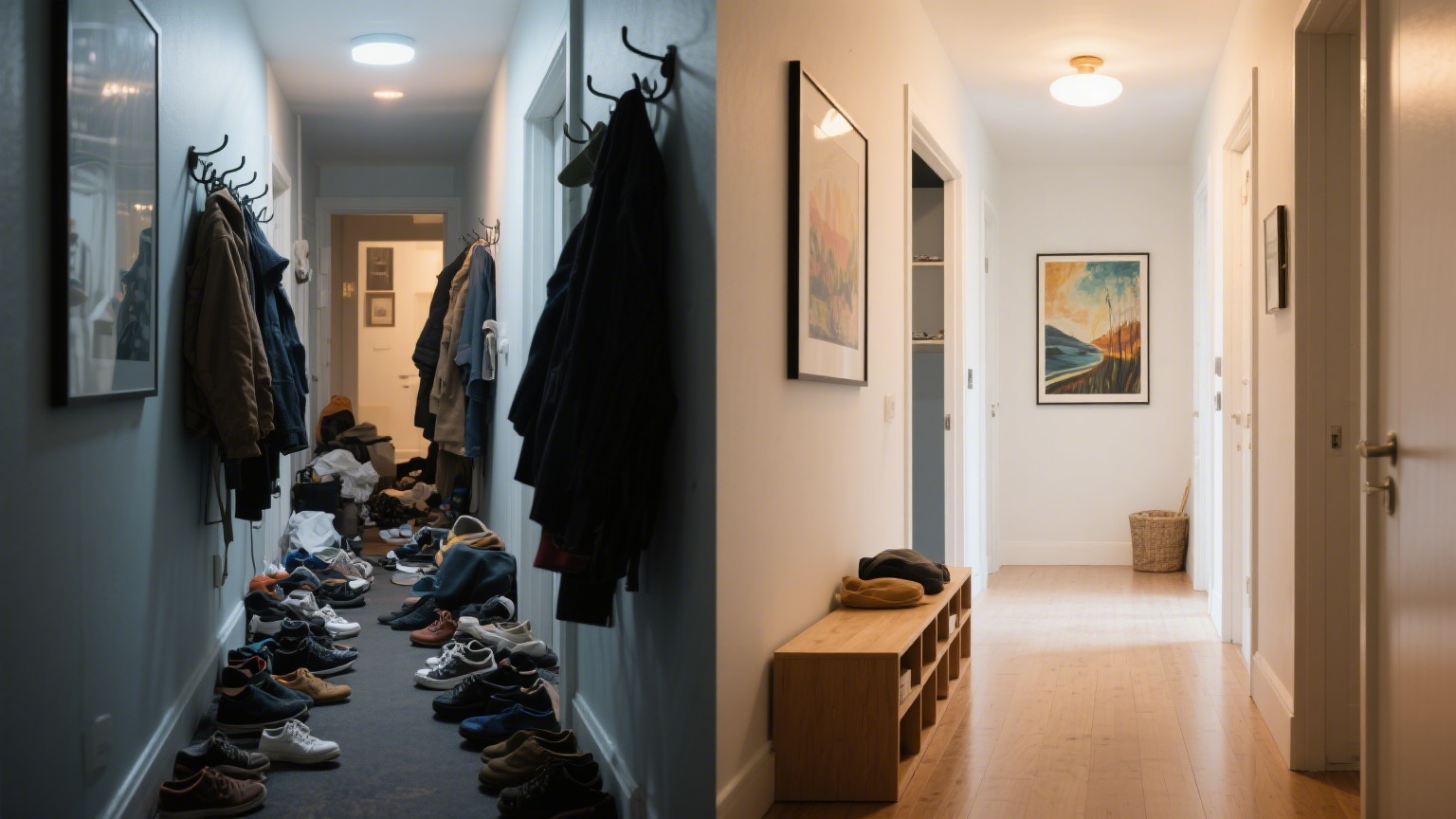
Let’s make this real. Take a look at the two hallways below. Don’t just glance—try to feel the difference. Which one lets you breathe, and which one makes your shoulders tense up? That feeling is your built-in Qi detector at work.
Okay, So How Does Qi Show Up in My House?
This is where it gets really practical. Think of Qi like a river. For it to be healthy and life-giving, it needs to flow smoothly and gently. It shouldn’t be a raging torrent, and it definitely shouldn’t be a stagnant pond.
In your home, Qi enters, moves, and exits. Here’s how to visualize it:
- Good, Healthy Qi (Sheng Qi): Imagine opening your front door and having a clear, gentle path into your living room. The light is good, the air feels fresh, and it’s easy to walk around. The energy meanders gracefully like a slow-moving stream, touching every part of the room and making it feel alive and nourishing.
- Bad, Stagnant Qi (Sha Qi): Now, imagine opening your front door and immediately being faced with a wall, or a pile of shoes and clutter you have to step over. The hallway is long, dark, and narrow. The energy either gets stuck right at the entrance (stagnant) or shoots down the dark hallway like a speeding arrow (too fast and aggressive). This energy feels draining, stressful, or just plain “stuck.”
The goal of good Feng Shui is to assess the flow of Qi in your home and make simple adjustments to smooth it out. You’re essentially becoming a “vibe” traffic controller for your own space.
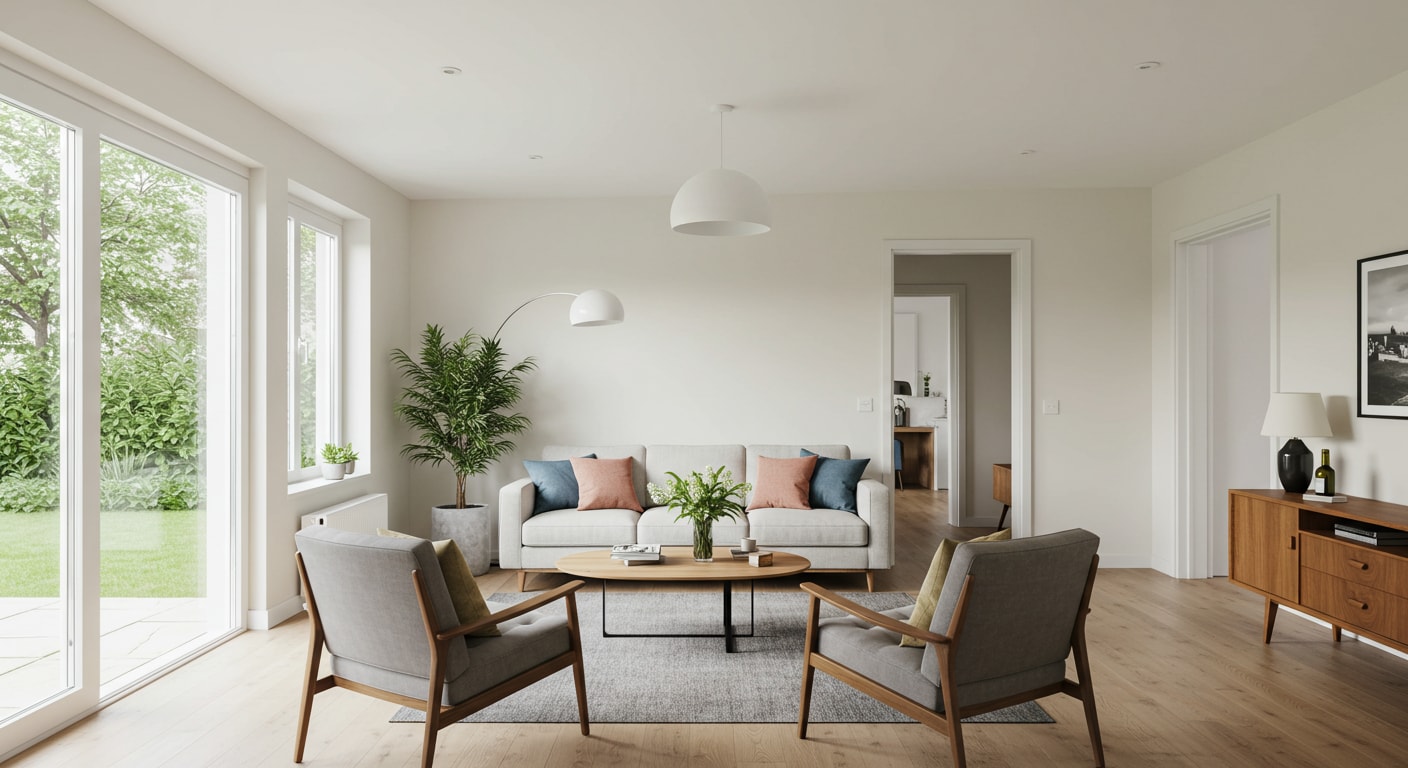
The goal isn’t a sterile, empty room, but one where energy can move with grace. It’s about creating clear, flowing pathways, much like a gentle stream. It often looks and feels something like this:
The Golden Rule: Your Front Door
If you do only one thing after reading this article, go look at your front door. In Feng Shui, the front door is called the “Mouth of Qi” because it’s the primary way that energy and opportunity enter your life. You want it to be a powerful, positive magnet for all the good stuff.
It can’t be overstated: your front door is the single most important feature for establishing good Feng Shui. Make sure the path to it is clear, a working doorbell, good lighting, and the door itself is clean and in great condition. This sends a powerful message to the universe that you are open and ready to receive good things.
You Don’t Need to Be an Expert to Start
Here’s the best part: you already have the most important tool you’ll ever need—your own body. How do you feel when you walk into a room? Do you feel uplifted, calm, and energized? Or do you feel tired, anxious, or uninspired? Your feelings are your personal Qi-detector. Trust them.
Start with the basics. You can dramatically improve your home’s energy with three incredibly simple steps:
- Declutter Ruthlessly: Clutter is the number one blocker of good Qi. It represents stuck energy, indecision, and a connection to the past. Go through your home and get rid of anything you don’t use, need, or absolutely love. Start with one small drawer. The feeling of lightness you get will motivate you to do more.
- Let There Be Light and Air: Good Qi is bright and fresh. Open your windows every day, even for just a few minutes, to let fresh air circulate. Wash your windows to let in more natural light. Fix any burnt-out lightbulbs. Light and fresh air are the fastest ways to disperse heavy, stale energy.
- Bring Nature In: Healthy, living plants are little powerhouses of vibrant Qi. They purify the air and bring the energy of nature and growth indoors. You don’t need a jungle—just one or two healthy green plants in your main living area can make a world of difference.
A Journey, Not a Destination
Feng Shui isn’t about achieving a “perfect” home overnight. It’s an ongoing practice of tuning in and making small, intentional choices that support the life you want to live. It’s about being mindful of your space and recognizing its power.
So, look around. Your home is telling you a story. By learning the language of Feng Shui, you’re simply learning how to read that story—and more importantly, how to give it a happier ending.
Welcome to the beginning of a beautiful relationship with your home. It’s going to be an awesome journey.
So here’s a small challenge for you. Right now, wherever you are, take a deep breath and just look around. How does the space make you feel? Just notice it. That awareness is your first step.
Stay positive and keep the good vibes flowing.
